
by John | Jun 3, 2019 | Updates
We first launched the WriteMovies Sci-Fi and Fantasy Award because we wanted to be transported to amazing, fantastical new worlds – and boy, did you guys deliver! Our entrants spanned the deepest reaches of space, magical lands, and all of time: past, present, and future!
The imagination is a writer’s most powerful weapon, and it was on full display here. Well done to everyone who entered; the quality was so consistently high that you made it extremely difficult for us to pick a winner!
Some of the things that helped us make our choice include:
- Originality of concept – giving us something truly unique instead of something we’ve seen before
- Depth and complexity of worldbuilding – making the universe of the story feel like a real, lived in place
- Impressive visual elements – taking full advantage of these genres’ strengths
- Great characters – ensuring that the human element doesn’t get lost!
So here it is… The first ever winner of the inaugural WriteMovies Sci-Fi and Fantasy Award is…
THE TIME-TRAP
By Mark Flood
A big congratulations to Mark, who has won guaranteed pitching to industry, two sets of Development Notes, and continued script development from us! Well done also to all of our Honorable Mentions, who you can find listed below.
HONORABLE MENTIONS
| OMEGA POINT, James Bingham |
ENDANGERED SPECIES, Mark Flood |
GODLESS SKIES, Joshua David Harris |
| FABLE OF THE JADE TIGER, Jason Fisher |
SHIRO, Pascal Kulcsar |
THE LAST PRISON, Richard Geiwitz |
| THE REVOLT OF THE WHALES, Michael Rhodes |
MARS GENESIS, Don Ternyila |
RACE MUSIC, Eric Weber |
by John | May 17, 2019 | Updates, Writing Insights
Writing a script is hard work, but getting a script turned into an actual movie can be even harder. There are all sorts of obstacles standing in the way, not least the key decision-makers and producers who will actually be responsible for the whole project. So how do you get these people to say yes to your work? (more…)
by John | Apr 4, 2019 | Updates
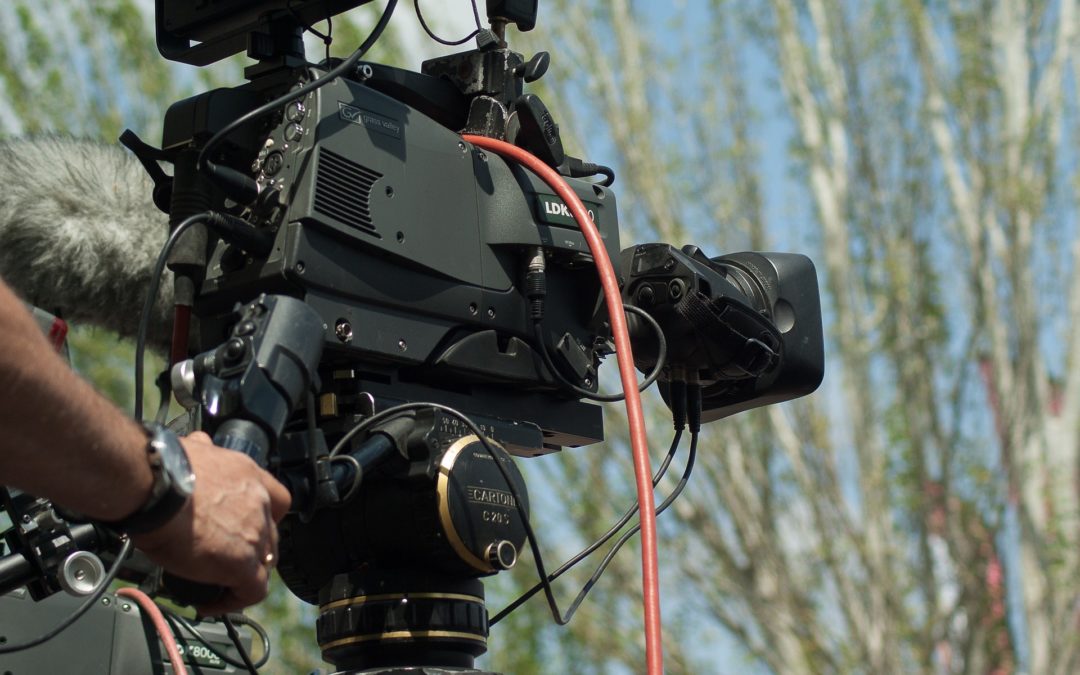
Writing a script is only half the work – getting it produced is the other half! To get that done, you need to get your work into the hands of key filmmakers – and that’s where we can help. WriteMovies is currently seeking scripts for two directors: Sean Hughes and Habib Zargarpour!
Sean Hughes
Sean is a director known for THE BARROW GANG – click here to take a look at a rough cut from the film! – and is currently on the search for scripts in the thriller/heist genre, along the lines of films like HEAT, THE USUAL SUSPECTS and L.A. CONFIDENTIAL.
If you’ve written a screenplay like this, submit to our Spring 2019 Screenwriting Contest and if we think it’s suitable for Sean, we’ll pass it along to him for his consideration – no matter how your work places within the contest itself!
Habib Zargarpour
A special effects expert, Habib is a two-time BAFTA winner and double Oscar nominee for his work on THE PERFECT STORM and TWISTER, with other credits including STAR WARS EPISODE I, BLADERUNNER 2049, and THE JUNGLE BOOK. He’s now looking for science-fiction based projects to direct, and with the recent launch of the WriteMovies Sci-Fi and Fantasy Award, this is the perfect chance to get your scripts to him!
Habib works closely with our founder Alex Ross who will give all suitable scripts consideration for them to develop and pitch to studios together.
Alternatively, if you’re a writer with an agent and want your script passed to either Habib or Sean, you can contact our partners at TalentScout International Management directly at david.vogel@atalentscout.com!
Click here to visit the page for our Spring 2019 Screenwriting Contest and get your script into Sean’s hands, or click here to visit the page for our Sci-Fi and Fantasy Award and get it to Habib!

by John | Mar 29, 2019 | Updates
BAD LISTING: a horror/thriller where nothing is ever as it seems…
BAD LISTING is the kind of script where it’s impossible to say what will come next. This horror screenplay, where twists and turns leave you constantly guessing and where things are repeatedly turned on their heads, impressed us with its compact storytelling and execution. A very worthy second place goes to Brent Hartinger for this script!
Having taken 2nd place in our Winter 2019 Contest, Brent wins a year of script development from WriteMovies and guaranteed pitching to industry, which are both now underway! If you’d like to win these kind of prizes and find success with WriteMovies, make sure you submit to our Spring 2019 Screenwriting Contest, which has a Grand Prize of $2000 and more (click here!)
Here’s a summary of BAD LISTING:
When Cleo rents a “shared” AirBnB unit, she worries the other guest, Jack, has a dark secret. But from Jack’s POV, Cleo isn’t who she claims to be either. Or maybe the real problem with this short-term rental isn’t Jack or Cleo, but an even darker, more sinister presence watching them both. A small-cast, minimal-location script.
If you’re a producer interested in this project, email david.vogel@atalentscout.com today!
And here’s a quick bio of the writer of BAD LISTING, Brent Hartinger:
 Brent has had nine screenplays optioned for film; four of those projects are currently in various stages of development, including PROJECT SWEET LIFE, a teen caper story, now in pre-production for a 2020 release.
Also a novelist, Brent has had three of his books optioned for film. His fourteen novels include THREE TRUTHS AND A LIE (Simon & Schuster), which was nominated for an Edgar Award; and GEOGRAPHY CLUB (HarperCollins), which was adapted as a feature film in 2013, co-starring Scott Bakula, and is now being developed as a television series.
Brent has won many screenwriting awards, including first place at the Storypro Awards, the Fresh Voices Contest, Acclaim Scripts, the L.A. Comedy Festival, the Screenwriting in the Sun Award, and a Writers Network Fellowship. All his scripts on TheBlackList.com have been “featured scripts,” with scores of “8” or higher.
A former entertainment journalist, Brent co-founded of the website AfterElton.com, which was later sold to MTV/Viacom. Now Brent continuously travels the world as a digital nomad, writing his screenplays and novels along the way.
Find out more by visiting his website: www.brenthartinger.com

by John | Mar 25, 2019 | Updates
So, you’re thinking of writing a TV pilot. That’s great news – this is a great time to be writing for TV!
After years of living in film’s shadow, the TV series has stepped up and become a major medium in its own right.
The days are gone when a television series would struggle to tell a big, coherent story from first episode to the last. The subscription model of networks like HBO rewards a viewer’s commitment to a show, and the rise of streaming services such as Netflix has made it easy for audiences to keep track of their favourite shows, never missing an episode – and as a result, television has become the place to tell more complex stories. Instead of cramming dozens of characters and subplots into a 2-hour movie, you can now spread them out over multiple episodes and seasons.
But when it comes to introducing viewers (and before them, readers) to such a complicated story in a pilot episode can be difficult. When you’ve got lots of things going on, it can be easy to lose track of who’s who and what’s going on in each storyline as we rejoin it. So here are our tips for writing a TV pilot to help you on the way:
- Create clear and distinctive personal identities for each of your regular characters. That way, it’s easy to recognize who they are and what they stand for in all situations and how they relate to the other characters around them.
- Not sure how to do this? Try to explain each of your characters in a simple two-word epithet to make sure that they’re strongly defined. If you can’t, their personality and role isn’t clear enough!
- It helps to gel a multi-strange pilot if all the plots, characters, and settings have visible and regularly affirmed connection to each other. This could be a person who all the others meet or see, a place they all share, a motif that keeps coming up in different contexts (e.g. a word like ‘change’).
- Another way to connect everything together is to have a focal event that everyone is directly affected by, or which every subplot is building up to. It’s best if this is something that all the characters are aware is coming up at around the 3/4 point of the episode.
Writing a TV pilot can be tough – you need a full season to tell a complex story, but you’ve also got to introduce that complex story in less than an hour in the first episode! But keep these tips in mind, and you should soon be heading in the right direction.
And if you want more inspiration, take a look at Ian Kennedy’s series of articles on GAME OF THRONES, for his thoughts on how the show juggles a huge cast of characters and locations with only very limited screen time each!

by John | Mar 22, 2019 | Updates
WITHOUT BORDERS: a socio-political thriller, unravelling a mystery that spans the globe…
It takes a lot to grab our attention and make it into the top three in our contests, but WITHOUT BORDERS by Chris Gebhardt and Jenn Russi did it in style. With high-octane action, political conspiracies, and a web of intrigue, this is a script that kept us on the edge of our seats from the first page to the last! And this is just the pilot episode for the rest of the series – the rest of WITHOUT BORDERS promises a lot more to come!
For taking 3rd place in our Winter 2019 Contest, Chris and Jenn have won guaranteed pitching to industry and a year of free script development with us, and we’re really looking forward to working on WITHOUT BORDERS with them! If you’d like to follow in their footsteps, be sure to enter our Spring 2019 Screenwriting Contest, which has a Grand Prize of $2000 and more (click here!)
Here’s a summary of WITHOUT BORDERS:
Alhena Mansour, a seasoned UN human rights investigator, returns to the Democratic Republic of the Congo after ten years away to investigate the disappearance of a UN worker in the war-torn East.
As Alhena navigates the minefield of political instability and humanitarian crisis, she quickly becomes embroiled in a far-reaching conspiracy to control the global economy. With millions of lives hanging in the balance, Alhena has no choice but to see her investigation through to the end… no matter the personal cost.
Alhena encounters old friends and new enemies on her journey down a dark path of human rights abuses and corrupt politics spanning from New York to Beijing. To get to the truth about what’s happening in the Congo, Alhena must confront old wounds and relive a traumatic event in her past… one which holds the key not only to her current investigation but to the world’s economic future.
If you’re a producer interested in this project, email david.vogel@atalentscout.com today!
And here’s a quick bio of the writers of WITHOUT BORDERS, Chris Gebhardt and Jenn Russi:
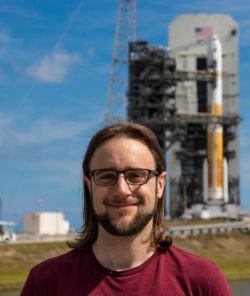 As a writing team, Jenn and Chris come from dynamic backgrounds that allow them to balance each other’s perspectives while drawing on their unique life experiences. Jenn has worked for five years in international development, primarily in Sub-Saharan Africa, and is currently undertaking a PhD in Politics at the University of Glasgow on UN Peacekeeping. Chris was the Chair of the Board of Florida High Schools Model United Nations from 2013-2016 and is now putting his 11 years of experience reporting on the world’s space programs to good use as the Assistant Managing Editor of NASASpaceflight.com.
Through their 15 years of friendship and collaboration, they have developed a strong foundation of effective communication and mutual respect that has allowed the theme of their writing to tackle issues — both good and bad — surrounding the globalization of society.
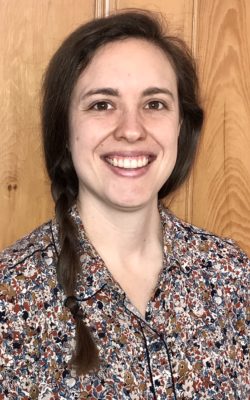 As a writing team, they have been mentored by award-nominated writers/producers Marc and Elaine Zicree (STAR TREK: THE NEXT GENERATION, BABYLON 5, SLIDERS, THE LAZARUS MAN). Their pilot, SURVEILLANCE, won “Best Pilot” for April 2016 in the TV Festival competition. Another pilot, TECHYCARDIA, won “Best Teleplay” at the 12th annual Action on Film Festival in September 2016 and was a Quarter-Finalist in the 2017 Fresh Voices Screenplay Competition.
Additionally, Chris received an LA-based production company grant in 2016 to write and produce a short filmed, AVOWED — which had a successful festival run and was nominated for Best Dramatic Short at the 2018 Central Florida Film Festival. He also received a paid, one-on-one mentorship in 2017 with TV and film writer David H. Steinberg.

by John | Mar 11, 2019 | Updates
One contest ends, another begins… We’re committed to championing great stories in our 20th anniversary year, and after an incredibly competitive final round of judging for our Winter Contest last week, we’re eager to see what else you’ve got for us. So here we go again: the WriteMovies Spring 2019 Screenwriting Contest!
The Grand Prize Winner will walk away with $2000, and the top three placed scripts will all receive:
- A year of free script development worth up to $3200
- Guaranteed pitching to industry
- Exclusive previews of WriteMovies Academy, our unique Virtual Film School
- Exclusive prizes from InkTip
And as with our last contest, you can get free entry to the contest when you buy a script report from us. Get invaluable feedback from industry experts to help you hone your script and make it the best it can be, with Judging Feedback from just $89 – see our full list of Script Report Services here!
What does it really take to win one of our contests, though? With each round of our last competition, we’ve written an article explaining how we judge scripts, what the criteria are, and the what the most common problems are in the submissions we’re read – a must read for anyone entering the WriteMovies Spring 2019 Screenwriting Contest.
So before you submit, take a look at our article on What Your Submissions are Telling Us and then our Semi-Final results, where we discussed what made these scripts really stand out. Finally – and most importantly – see our Winners Announcement to find out what kind of questions we’re asking when picking between the strongest submissions in the contest.
WriteMovies has been helping writers succeed for twenty years. Enter the WriteMovies Spring 2019 Screenwriting Contest to begin your writing journey with us by clicking here!