by John | Apr 13, 2018 | Writing Insights
Jamie White continues his thoughts on writing for video games. This time it’s all about the difficulties of writing open world games…
Up until now the games I’ve talked about have had a very linear narrative structure. The gamer doesn’t really have that much control of where the character goes or what they can do. That’s all about to change as we look into what is possibly my favorite genre of game – open world sandbox RPGs.
OK, it can be a bit of a mouthful, but these types of games (which I’ll just refer to as sandbox games) are usually the most immersive. They offer the player a variety of options within an open world setting – you can create your own character from scratch sometimes, mix and match weapons, and perhaps most importantly, nail your outfit. That might sound kinda silly, but giving the player that little bit of control allows them to put some of their personality into the character.
So why are they called sandbox games? Well, as always, Wikipedia puts it best…
“A game in which the player has been freed from traditional video game structure and direction, and instead chooses what, when, and how they want to approach the available content. The term alludes to a child’s sandbox without rules, with play based on open-ended choice. While some sandbox games may include building and creative activities, they are not required. Sandbox games generally employ an open world setting to facilitate the player’s freedom of choice.” – https://en.wikipedia.org/wiki/Glossary_of_video_game_terms#osandboxgames
So, in short, you can do whatever you like with sandbox games – as long as you stay inside the sandbox and only use the sand and really cool customizable plastic shovels.

A collection of various sandbox games.
I also mostly find that these games have some of the best storylines. Whether it’s the more recent Horizon: Zero Dawn or Nier: Automata, or classics of years gone by like Red Dead Redemption or GTA: San Andreas. The big issue for writers when writing for these types of games, though, is side quests.
Think of side quest as sub-plots. Some are more related to the main plot than others, while some are simply hunting and/or gathering missions. What they should always be, though, is interesting. The escort side mission has become the bane of many gamers’ existence (it’s just so damn annoying!) and finding specific artifacts or plants to complete a quest is just super tedious and unimaginative. These types of missions can add some needed variation to side quests, but finding several unique ways to handle them can be a tough task for writers.
An even tougher task is how the hell you actually write these types of games. And much like the narrative focused games I looked at in my previous article, there isn’t a set way. You gotta go with whatever makes sense to you. But, I do have a suggestion.
Sandbox games are comprised of, essentially, two plot arcs: A) The main story and B) the side quests. Sometimes these side quests only become available after you’ve reached a certain point in the main story, or after you’ve unlocked a certain weapon, or whatever, so how can you writer both into one document?
Well, you’re familiar with those “Choose Your Own Adventure“ novels, right? The ones that say “Turn to page 36 to follow the dragon”, then you turn to page 36, get killed by the dragon and quickly turn back to the previous page. Well, I think you could follow a similar sort of format.
Start out writing the main plot as you would a regular script. Then, when you get to a place where you think “hey, I can add a side quest here”, make a note like “SIDE QUEST “A side quest served cold” now available. Turn to page 124 for narrative”, then carry on with the main plot. You could either then finish the main storyline before adding the side quests, or add them as you go.
Again, it’s best to do it however you feel comfortable. While there’s strict format for screenplays, that is not really the case for video game writing.
Most importantly, though, especially for new video game writers – stick to writing the main plot. Don’t take the Skyrim route that has several big plotlines and what feels like millions of side quests. It can be exhausting to play, so I can only imagine how it would be to write…
If you wanna write your own video game script and enter it in our Spring Contest (we allow video game scripts now!) but aren’t quite sure on how to approach it, just get in touch! Maybe we can end up doing a Q&A sorta thing…? We’ll see!
I wanna also talk about why you film and TV writers should not look to adapt video games into mainstream consumptive media, but that’s an article for another day…
by John | Apr 12, 2018 | Industry News
Zachary Quinto has revealed that there are three STAR TREK scripts being written for the fourth film in the franchise. The scripts are being written by the likes of Doug Jung, Simon Pegg, and even Quentin Tarantino.
It would be really exciting to see what sort of script would come from Tarantino for the Star Trek universe – no doubt, the blood, swearing, and Samuel L. Jackson appearances would rise significantly. Even one of his screenwriting competitors for the gig, Simon Pegg, has stated before that Tarantino could be the guy to take Star Trek forward (see THIS article).
We’re certainly down for a Tarantino Trek – what about you?
Read more at http://www.joblo.com/movie-news/zachary-quinto-says-that-there-are-several-star-trek-scripts-in-the-works-332

by John | Apr 12, 2018 | Industry News
Joaquin Phoenix has been teasing potentially playing the new Joker in Todd Phillips’ upcoming Joker origin film. Phoenix has refused to rule out the possibility of the Joker and has said “I don’t know… it could be an interesting character, I don’t know,”
Phoenix would certainly be a great choice for the role, but while the project is still in development we can continue to speculate.
I’d love to see an older Joker with the likes of Willem Dafoe or Mark Hamill (who voices Joker in many animated iterations of the character). Hamill has even said before that he’d be interested in portraying a live-action version of the Joker. Who would you like to play the clown prince of crime the next time he shows up in Gotham?
Read more on Phoenix’s response here: http://www.joblo.com/movie-news/joaquin-phoenix-won-t-talk-joker-role-but-admits-it-could-be-interesting-200

by John | Apr 9, 2018 | Movie Reviews and TV Reviews
We go into the Oasis to see what Steven Spielberg’s latest sci-fi action flick really has to offer… First Look: ready player one review by Jamie White.
I’m sure there’s a lot to like about READY PLAYER ONE. The adrenaline pumping action scenes, the unique and intriguing concept about virtual reality video gaming, the discourse it has about our current culture and gaming. The skepticism about how advanced technology can just take over our lives, and even give us an outlet to create a new life. I, however, did NOT enjoy this. At all.
You may hear that a producer will only read the first 10-20 pages of a script – all the busy people we would be pitching to, rely on a great first ten pages to convince them a script is worth reading. This script would not (or should not have) made the cut.
The constant, highly expository voice-overs from the main characters, lazily doing the heavy lifting (the world building). It was infuriating. And oh boy did the voice-over not end there. Dear God… I could go on and on about how the script let this film down, but I’m sure I won’t waste too much of your time, so here’s a quick list.

- That exposition throughout the first ten minutes. Then when the title card finally hit I thought “Oh thank ****! The actual film can start.” What was the first thing you hear next? That’s right – another voice-over. Man, oh man, did they overuse voice-overs in this film.
- The dialogue was incredibly cringey. Anyone could’ve written the dialogue for this.
- Certain “twists” or reveals were uninspiring and predictable. (People’s real-life identities, for example).
- There was no sense of time in this film – it really felt like everything happened within 2-3 hours.
- Character relationships were rushed, and, you guessed t, incredibly conventional and stereotypical. The romantic subplot advanced to “I love you” within 5 interactions between the love interests. I mean, c’mon.
I’ll stop there before I get too frustrated, but I do just want to add on one small thing. This film was set in 2040, but there was nothing to suggest that (other than the massive virtual reality world). Every reference or cameo was to something that was made over 20 years prior. Anything from Overwatch to Sonic to Asteroids was used – but we didn’t get any notion of what 2040 pop culture was like. Maybe it’s a criticism of the huge focus on franchises, but it still felt very jarring. As was the very 80s centric soundtrack – I get why they went that route, but it felt so wrong – GUARDIANS OF THE GALAXY pulled it off perfectly, READY PLAYER ONE did not. If you wanna have the 80s culture play such an integral part have the protagonist be an 80s freak – it otherwise just felt out of place.
Phew! OK, so there’s my little rant. I didn’t wholly dislike the film, but there was much in there that took me out of the experience, and that’s what killed it for me.
What did you think of READY PLAYER ONE? I hope you enjoyed more than I did!
by John | Apr 4, 2018 | Writing Insights
With the recent arrival of a new Elite Mentor joining the team (one who specializes in video games), Jamie White continues his look at how you can be successful at writing for video games.
After looking at the linear narrative to the Call of Duty games last time, I thought the next step would naturally be to look at games with an over-arching narrative, but with hundreds, maybe thousands, of variations and combinations.
For me, the story is almost always more important than gameplay. Of course, there are various examples where it’s the other way around (looking at you Bloodborne) but the story and characters are the most important thing in video games, as they should be for any medium.
And so, that’s why I love TellTale games, Life is Strange and Heavy Rain. These games can be played by any kind of noob, by a child, or even your dog. These types of games mostly rely on you just pressing buttons to choose one of four dialogue options or performing “Quick Time Events”. I’d hesitate to even call them games – more like… interactive movies. And you know what? That’s fine with me.
But these types of games are much more difficult to write than the linear narrative of Call of Duty or the Injustice games. Looking primarily at TellTale, they employ an episodic format for their game releases. So, The Wolf Among Us will have 5 episodes, or their Game of Thrones game will have 6 episodes, which are released every 2-3 months. But the seemingly impossible task comes from the amount of choice you have within these games. Choosing from 4 dialogue options is no exaggeration, and there will be a LOT of conversations throughout the game – sometimes they force you to make a choice (to kill one guy or another, to burn a magical tree or not).
The secret with these type of games, though, is the choices and dialogue options don’t really matter. They give the player the “illusion of choice”. So, you can easily write the basic outline of the plot, then go back in and decide where you want to have multiple dialogue options. Go back and write in a QTE as you would an action scene – but remember, the player can mess these up, so you’ll need at least two outcomes for each action the player does (or fails to do).
Check out this video to the opening of TellTale’s The Wolf Among Us. This is the very first thing the player does. It’s a great intro to both the series, the game, and the game type.
Just a warning there is some violence, swearing, and a talking frog in this video. So, you’ve been warned.
I chose The Wolf Among Us for a couple of reasons. A). I love it. I love the story, the concept, the tone, the themes. It’s brilliant. Go play it, or at the very least, watch the playthroughs. It’s worth it. B). It showcases really well all the elements of a “Branching narrative” game.
Just note how many multiple-choice options there are, how many places the player can actually screw up. Then think about all the potential consequences and outcomes to each different dialogue choice or failed action. There’s a lot, right?
The best advice I can think to give if you want to write this type of video game is… How would you (as an individual) find it easiest to write this opening scene from The Wolf Among Us? There’s no right answer. You can use Celtx (format it as you would when two people talk at once, then do the same for the replies), or Excel (put each dialogue/action option into a separate cell), Word, a flowchart. Whatever you feel would be the most efficient way to map out multiple dialogue and action options FOR YOU, is the right answer.
And if you feel a little overawed by this task, take a look at the time of the video linked. It’s just under 2 hours. Almost like a film! The episodic format of these types of games allows you as writers to use episode one as a learning curve. You find out the best way you write this type of game, take a break, then get going on episode two.
Next, I’ll look at open world sandbox games, tell you to stay away from writing things like Skyrim, and why make your own adventure novels could be an inspiration for writing these types of games.
by John | Mar 30, 2018 | Updates, WriteMovies News
UK/EU citizen? You need to read this!
Thanks for supporting WriteMovies, the bridge between writers and the international entertainment industry. Over the years, we’ve brought you mentoring and consultancy, contests and pitches, news and insights. We have provided hundreds of awards, and secured hundreds of writers representation and more in the international industry.
To continue to provide these to you in accordance with the new Data Protection laws in the UK and EU, we need you to reconfirm what you’re happy to receive from us.
Simply input your name and email address, choose from the options provided, and Submit your form to us. We’ll do the rest!
Sign up here!
|
Here’s what you’d be missing out on without our marketing… highlights from recent months!
|
| Anything marked with an asterisk(*) indicates a required field.
Your data will be handled securely according to our Privacy Policy.
|
|

by John | Mar 30, 2018 | Highlights, Marketing, Updates, WriteMovies News
A year in the life of an innovative Script Agency… Facts and figures to mark two years since our successful relaunch in 2016.
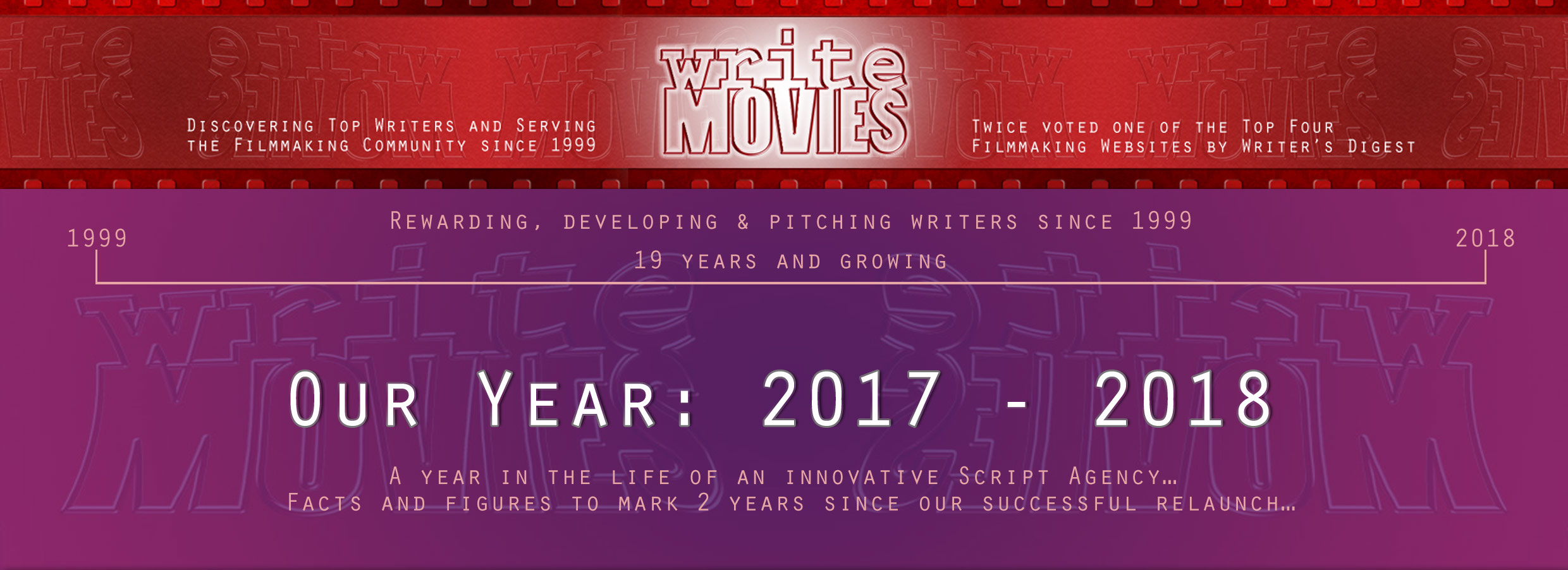
It’s that time of year again where we look back on the previous 12 months and say “you know, we’ve had a pretty good year…” And we have!
Our Year…
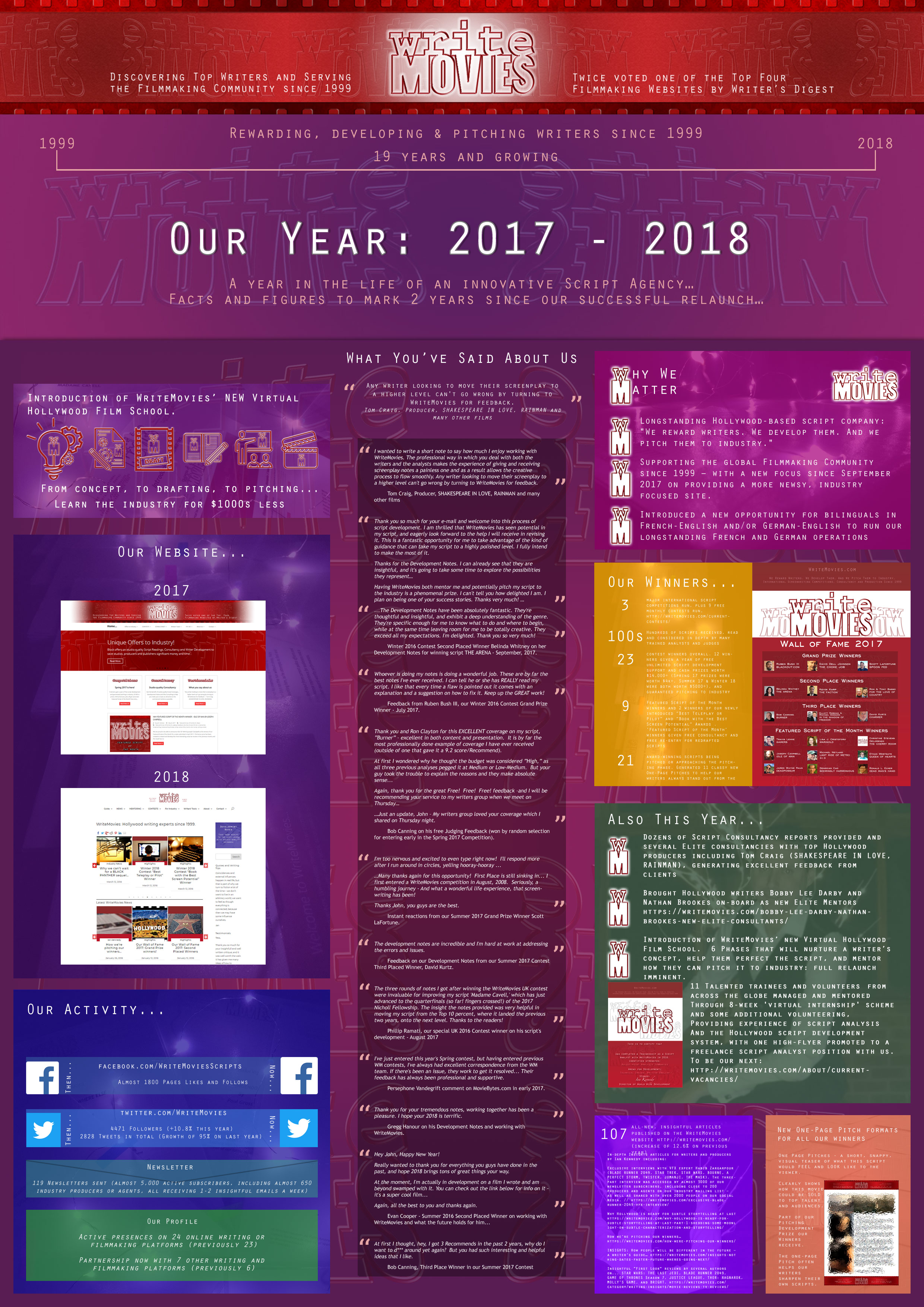
Since our successful relaunch 2 years ago, we’ve been constantly growing and evolving our online presence – which you can see from these infographics!
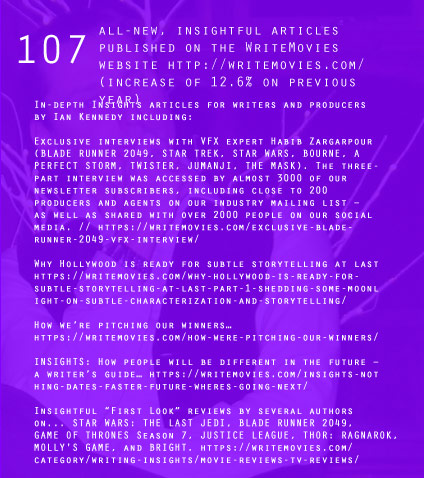
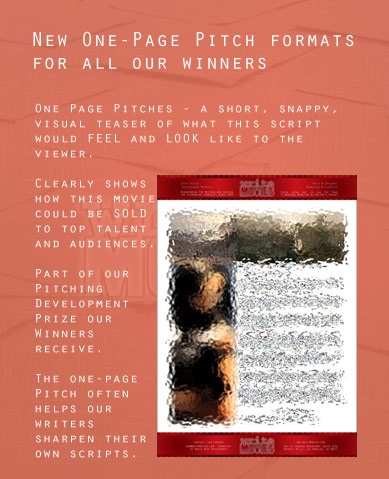
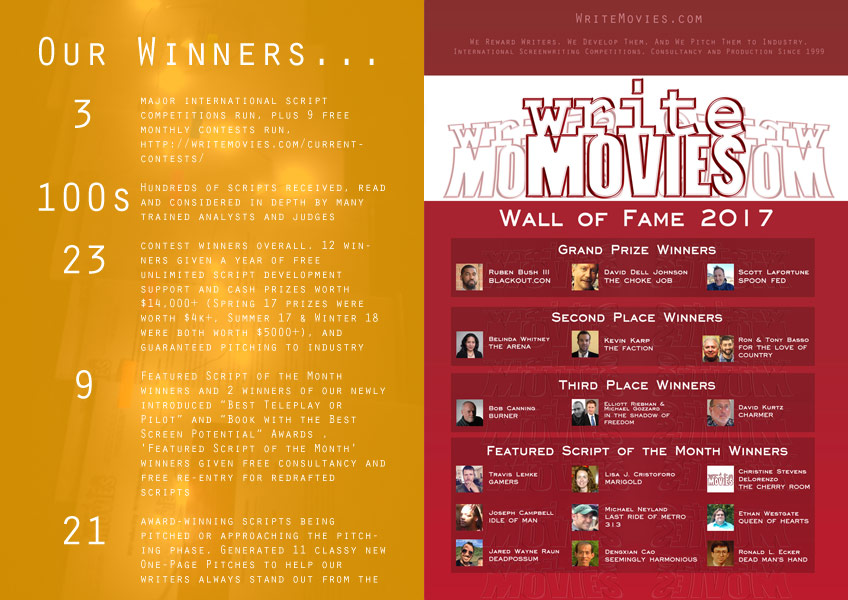
As well as updating and reshaping our website organically over the last two years, we’ve also been highly active on social media, screenwriting forums, and providing insightful newsletters, of course! So, here’s a couple of snippets celebrating WriteMovies online in the past year.



We’ll bring you more tomorrow it’s all about “Why We Matter…” And then… the full graphic in all its glory!